Writing
12/14/2025 · essay · coherence, everyday friction, systems misalignment, complexity, rapid change
The Coherence Problem in Plain Language
1. A Gentle Opening
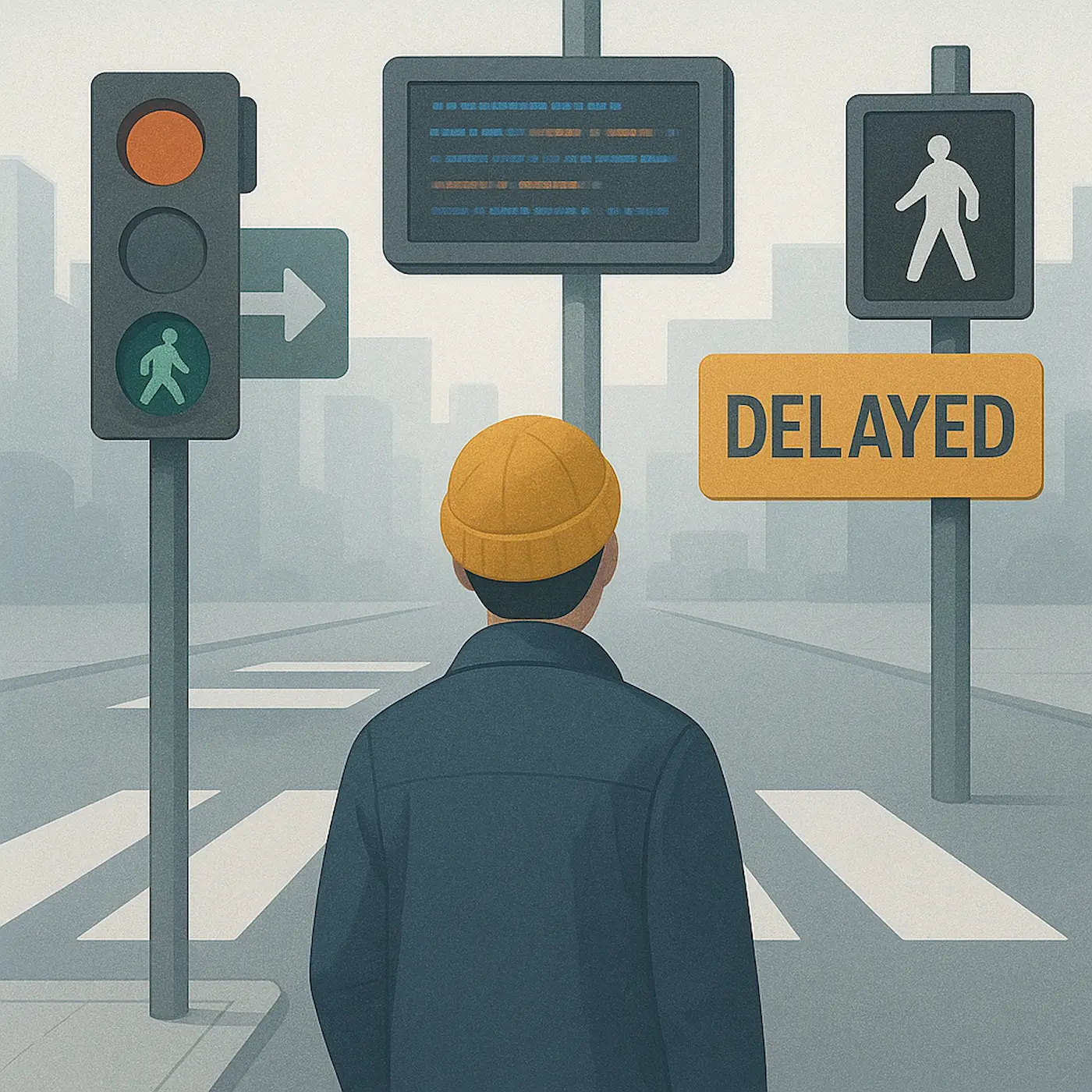
You may have noticed that life feels harder to make sense of lately. Not just in one part of your day, and not just around one issue, but across many different things at once. Prices go up while incomes stay the same. Services that used to work smoothly now feel unpredictable. One message tells you one thing, another message tells you the opposite. You follow the rules in one system only to run into a different set of rules in the next.
If this sounds familiar, you are not alone.
People in many places and from many backgrounds have been experiencing the same kinds of frustrations. It feels as if the world used to run on tracks that stayed lined up, and now those tracks shift without warning. What felt steady now feels uncertain. What used to connect cleanly now feels slightly out of sync.
This does not mean that people have changed for the worse, or that anyone is failing. It points to something deeper. The systems around us are having a harder time fitting together. When the parts of daily life do not line up in the way they once did, the result is a general sense that things are off, even if nothing looks obviously broken.
Once you begin to notice this pattern, many confusing experiences start to make more sense. The feeling of friction, the repeated contradictions, the sudden complications that appear out of nowhere. They are not random. They reflect a larger shift in how the world fits together.
This document is an invitation to see that shift more clearly, in plain and familiar terms.
2. The Pattern
When you look closely at what has been happening around you, a pattern begins to appear. It does not point to one group being right and another being wrong. It does not come down to a single decision, a single institution, or a single mistake. It is more basic than that. It is structural.
Here is what the pattern often looks like in everyday life:
- Things that are supposed to work together do not line up.
- Rules or instructions contradict each other.
- Information changes faster than anyone can keep up.
- A fix in one place creates a new problem somewhere else.
- Decisions make sense in one step but do not carry forward to the next.
- Systems that used to feel simple now feel tangled and unclear.
People experience these moments in different settings. For some, it shows up at work. For others, it appears in public services, digital tools, or everyday routines like scheduling, billing, or filling out forms. The details vary, yet the shape of the problem is strangely similar no matter where you look.
It is as if the gears that once meshed well enough now slip more often than they catch.
There is a name for this recurring shape. It is a coherence problem.
Coherence simply means that things fit together in a way that makes sense. When coherence is strong, systems connect smoothly. When coherence weakens, things begin to feel slightly off, harder than they should be, or unexpectedly confusing, even when everyone involved is trying their best.
Once you recognize the pattern, it becomes easier to understand why so many frustrations feel related, even when they come from completely different parts of life.
3. Why It’s Showing Up Everywhere
If this kind of issue were happening in only one part of life, it would be easier to explain. But people are seeing it in schools, workplaces, stores, hospitals, public services, online platforms, and even in small local interactions. The same kinds of mismatches appear almost everywhere.
The reason is not simply that the world is changing. It is that the world is changing faster than the systems we rely on can adjust.
A few everyday examples:
- Prices rise faster than wages or household budgets can respond.
- Companies rely on multiple tools that do not communicate with each other.
- Public services still use older processes that struggle to keep up with current demands.
- A supply shortage in one country affects prices in another.
- A simple software update in one place breaks three things you depend on someplace else.
Because everything is more connected than it used to be, small issues do not stay small. They spill outward into places that seem unrelated:
- A storm far away affects the items on your grocery shelves.
- A policy change in one department slows down a workflow across an entire organization.
- A minor digital glitch disrupts thousands of people.
- A global event changes local prices or rules overnight.
None of this is happening because people are careless or because anyone is doing anything wrong. It is happening because the systems we use every day were built for a world that moved at a different speed and had fewer connections between its parts.
When systems fall out of step at the same time, people feel it. They sense the misalignment even if they do not have words for it. The result is a growing feeling that the world is somehow out of sync.
Understanding why this is happening does not remove the frustration, but it can make the moment easier to understand.
4. Why This Moment Feels Different
Every generation has faced difficulty, and challenges are not new. What feels different today is the way problems seem to slip out of alignment more often and more quickly than before. Many people describe the world as faster, more tangled, and more sensitive to small disruptions. This feeling is not imagined. It reflects several major shifts that have changed the conditions we live in.
A few of the most important shifts include:
Things move faster than before
News, technology, prices, rules, and expectations all change at a pace that many systems were never built to handle. Updates that once happened over years now happen in months or weeks. When systems cannot adjust quickly enough, they begin to fall out of step.
Everything is connected
A disruption in one place rarely stays there. Events in one country can affect prices in another. A shift in one industry can reshape several others. Local systems now depend on global ones in ways that were rare only a few decades ago.
Systems have become layered and complicated
New tools are added on top of older ones. Old rules blend with new rules. Processes that once felt simple now involve many steps, each with its own quirks. When the structure behind a system becomes hard to see, it also becomes harder to keep aligned.
Decisions take longer than events
Many institutions still rely on decision timelines that were designed for slower periods. Committees meet monthly. Policies take months to update. Plans assume stability that no longer exists. By the time a decision is made, the situation may have already changed.
Small issues now have larger effects
Because everything is more connected, a small mismatch can create a noticeable ripple. A missing part delays entire supply chains. A small misunderstanding in a policy spreads confusion across departments. A simple glitch disrupts thousands of people.
These shifts create a world that feels slightly too fast, too tangled, and too reactive. Not because anyone is failing, but because the structures around us were not designed for the speed and complexity of the present moment.
Once you see these forces working together, the feeling that something is off becomes easier to understand. It is not a personal shortcoming. It is a sign that systems built for an earlier time are being stretched in ways they were never meant to handle.
5. A Simple Way to See It
Coherence, in plain language, simply means that things fit together in a way that makes sense. You do not need technical knowledge to understand it. You recognize it the moment you see it, and you feel its absence just as easily.
When coherence is present, things line up
- instructions match the actual steps you need to follow
- information stays consistent as it moves from place to place
- different parts of a process support each other
- decisions make sense from one step to the next
- systems feel predictable enough that you can plan with confidence
When coherence is present, even difficult tasks feel manageable because everything connects in a clear and steady way.
When coherence is missing, things drift
- rules contradict each other
- information changes unexpectedly
- transitions break instead of connect
- small updates create new confusion
- you get different answers depending on who you ask
When coherence breaks down, even simple things become frustrating. A process that should take one step suddenly takes five. A system that used to work becomes unpredictable. A routine interaction becomes a guessing game.
Coherence is not about perfection. It is about alignment. It is about the sense that the parts of a situation relate to one another in a stable, understandable way.
You do not need special training to notice coherence. You only need to pay attention to when things fit together smoothly and when they do not.
Once you start looking for it, you begin to see coherence and drift everywhere.
6. Why This Perspective Helps
Seeing the coherence problem will not fix every challenge in your life, and it is not meant to. What it can do is make sense of why so many different frustrations seem to share the same shape. Once you understand the pattern beneath them, the world feels a little less random and a little less overwhelming.
Here are a few ways this perspective can help:
It replaces confusion with clarity
What once looked like dozens of unrelated problems often turns out to be one underlying issue showing up in different places. This makes the situation easier to understand, even if it is still challenging.
It helps you make sense of your own experience
The friction you feel is real. It is not a personal failure, and it is not a sign that you are missing something obvious. It is a sign that the systems around you are under pressure, and those pressures are not your fault.
It helps you see patterns instead of chaos
When you understand how coherence works, you can see why small changes lead to big reactions, why rules contradict each other, and why updates in one place cause confusion somewhere else. The world becomes more legible.
It restores a sense of orientation
You do not need to solve every issue to feel steadier. Having a name for the pattern helps you navigate the moment with a little more confidence. You can see what is happening without getting swept away by it.
It opens a more grounded and compassionate view
You do not have to assign blame or pick sides. You do not have to explain everything or fix everything. You can simply recognize that many systems are struggling to stay aligned, and that this struggle is shaping daily life for many people.
Most importantly, understanding the coherence problem can help you feel less alone. The strain you are noticing is not isolated. It is appearing across many areas of life because the underlying systems are being stretched in similar ways.
Recognizing this can bring a quiet kind of steadiness, even if nothing else changes right away.
7. Closing
You do not have to fix the entire world to feel more grounded in it. Sometimes, simply understanding why things feel off can change how the moment feels. The coherence problem offers a simple way to see what is happening beneath the surface. It helps explain why systems that once fit together now slip out of alignment, and why modern life often feels strained even when everyone is trying their best.
Once you begin to notice this pattern, the world can become a bit clearer. Not perfectly clear, and not instantly easier. But steadier. More understandable. More connected. You may start to recognize the places where things line up, the places where they drift, and the small adjustments that make a bigger difference than expected.
If this way of seeing resonates with you, you can follow it at your own pace. Pay attention to where coherence appears in your day, where it fades, and how it shapes the experiences of the people around you. You may find that it brings a sense of orientation in a time when orientation can feel hard to come by.
The world is changing quickly, and the systems we depend on are being stretched in new ways. But clarity itself can offer its own form of steadiness. Coherence is one way to find that steadiness, by revealing the deeper patterns that connect the challenges of today to the structures that shape our daily lives.